
A long drive looks like a logistics problem. Route, playlists, snacks, hotel bookings, who takes the first shift. The vehicle gets a quick glance in the driveway and a full tank on the way out of town, and that ordering is backwards, because the things that actually wreck a road trip almost all start under the hood or at the four patches of rubber holding two tons of car to the pavement.
Distance changes the math in a way that is easy to underestimate. A twenty minute commute forgives a soft tire, a battery on its last winter, and brake fluid nobody has looked at since the car was new. Nine hundred kilometers of highway does not forgive any of it. Heat builds, small vibrations become big ones, and a part that was merely tired at home becomes a shoulder stop.
So useful trip prep runs about a week out, not the night before, because a week leaves room for a shop appointment. Here is the sequence, roughly in order of how much trouble each item causes.
Tires Carry the Most Risk per Dollar of Attention
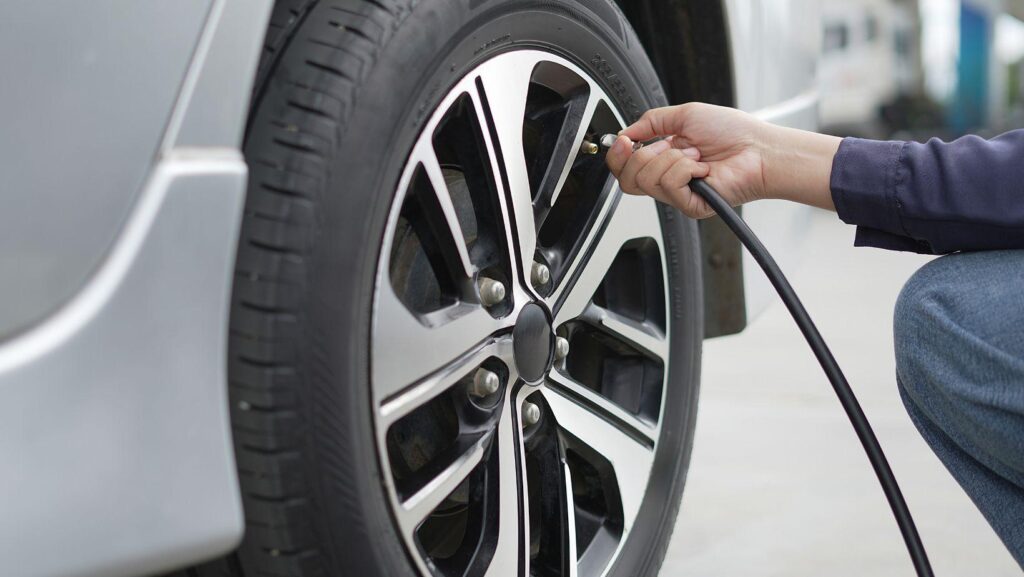
Start with pressure, because it is free to check and it drifts constantly. Temperature alone moves it: the Canada Safety Council notes that tire pressure drops roughly one pound for every five degree Celsius fall in temperature, which means an October reading is not an honest November reading. Set them cold, before the car has been driven, against the number on the placard inside the driver door rather than the number molded into the sidewall.
Then look at tread and at wear pattern, which tell different stories. Shallow tread across the whole tire is simple age. Wear concentrated on one shoulder, or feathering you can feel with a palm, points at alignment or suspension, and alignment problems get worse over long straight stretches rather than better. Check the spare too, since a spare at half pressure is decoration.
Fluids, Brakes, and the Battery Need Lead Time
Oil, coolant, brake fluid, washer fluid, transmission fluid where the dipstick exists. Topping up takes minutes; discovering that the coolant is the color of weak tea is why you look a week out. Brakes are the item most worth paying someone else to inspect, because pad thickness and rotor condition are hard to judge from the driveway and brake fade on a mountain descent is not a problem you can negotiate with.
Batteries fail on a schedule nobody watches. Most last three to five years, they die in cold weather after being weakened in hot weather, and the warning sign is a slightly lazy crank that owners stop noticing because it happens gradually. Any shop will load test one in minutes. Replacing a marginal battery before a trip costs money; replacing it in an unfamiliar town costs money, a morning, and the reservation at the other end.
A Kit in the Trunk Is the Cheapest Form of Insurance
The kit is where people either overthink or skip entirely. ICBC's emergency kit guidance is a good baseline and it is mostly unglamorous: ready to eat food and water, a battery bank, a flashlight with spare batteries, a small first aid kit and personal medications, copies of insurance papers, cash in small bills, seasonal clothing and an emergency blanket. Add the vehicle specific layer on top, which is jumper cables, a tow rope, flares, and in winter a shovel, a scraper and something abrasive for traction.
Two details matter more than the list. Keep it in the car permanently instead of packing it per trip, because the trip you forget to pack for is the one where it matters. And check it twice a year, since batteries leak, snacks expire, and a flashlight that has sat in a glovebox through two summers is often just a plastic tube.
Route, Weather, and Coverage Belong on the Same Checklist
Navigation is solved until it is not. Download offline maps for the whole corridor, because coverage gaps are normal between towns, and carry a paper map for the stretch you are least sure about. Read the forecast properly rather than glancing at an icon; Environment Canada's regional forecasts and public alerts will tell you about a system two provinces ahead that your departure day weather says nothing about.
Coverage is the last item and the one most often assumed. Pull the policy and confirm what it actually does outside your province, whether roadside assistance is attached or sold separately, what the deductible looks like, and whether rental reimbursement exists. Drivers comparing options can look at Car insurance for Kitchener drivers to see how local coverage is structured before a long trip, and a ten minute call to a broker before departure is considerably easier than the same call from a roadside.
Conclusion
None of this takes long. The pressures, fluids, lights and kit are an afternoon, the shop inspection is a morning booked in advance, and the policy review is a phone call.
The car is also only half of what you leave behind. A short walk through the house, covering the things worth checking at home before you leave, saves the particular dread of wondering about a breaker panel from six hundred kilometers away.
The point is not to eliminate risk, which is not on offer. It is to move the failures forward in time, into a driveway on a Tuesday where they are merely inconvenient, and out of a Saturday night on a highway where they are something else.