
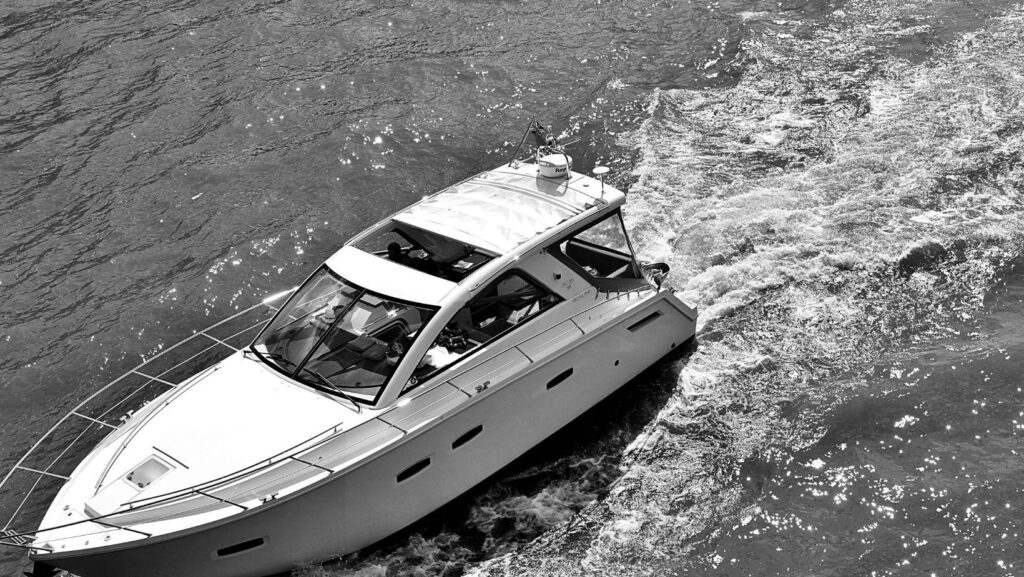
The first season is the honest one. You buy the boat, and for about three months the only number you remember is the one on the bill of sale, because every weekend pays you back in water and sunlight and that particular quiet a dock has early in the morning. Then the second season arrives, and the invoices start to show up with it.
None of this is a reason not to own a boat. It is a reason to know what owning one actually costs, because the people who sell their boats after two years rarely do it because they stopped enjoying the water. They do it because the running costs showed up in a shape they had not planned for.
So it helps to lay the whole picture out before the purchase rather than after. Boat ownership is a collection of recurring obligations and occasional surprises, and almost all of them are predictable if you bother to look at them in advance.
The Purchase Price Is Only the Opening Figure
Whatever you pay for the hull is the smallest of the big numbers, and it rarely arrives alone. A trailer, a cover, life jackets, fenders, dock lines, a depth finder, and the registration decals all land in the first month, and together they can add a surprising fraction to the sticker. Used boats carry their own version of this, since the survey and any deferred maintenance arrive attached to the sale.
Financing changes the arithmetic as well, and not only through interest. A lender will usually want physical damage coverage in place before the loan funds, which means the insurance decision happens at the same moment as the purchase rather than comfortably afterward. Knowing that in advance keeps the closing from turning into a scramble.
Storage and Transport Are the Quiet Monthly Line
Where the boat sleeps is usually the single largest recurring cost, and it varies enormously by region and by how much convenience you want. A slip at a marina buys you walking-on-and-going access and a monthly bill to match. Dry storage costs less and adds a launch ramp to every outing. A driveway and a trailer are cheapest of all, right up until the city has an opinion about it.
Winterizing and haul-out belong in the same column, since shrink wrap, blocking, and engine prep are annual whether you use them or not in a mild year. Moving the boat any real distance is its own project too, and the logistics resemble moving a vehicle a long distance more than most owners expect.
Fuel, Maintenance, and the Annual Rhythm of Upkeep
Marine engines are thirsty in a way car engines are not, because a boat pushes water instead of rolling over pavement. Fuel burn depends on the hull, the throttle, and your patience, and a single long weekend of water sports can empty a tank twice. Owners who track it tend to budget by the hour of engine time rather than by the mile, which is a far more useful unit.
Maintenance splits neatly into scheduled and unscheduled. Oil, impellers, plugs, zincs, bottom paint, and an annual service are the predictable half, and skipping them simply converts them into the other half. Safety gear is cheap by comparison and worth keeping current, which matters more than it sounds: the U.S. Coast Guard compiles reported recreational boating accidents every year from reports filed by owners and operators.
Registration, Insurance, and the Paperwork Half of Ownership
Registration and titling are state business, and the fees scale with length in most places, which is why a two-foot difference in hull can change your renewal notice. Registrations are also the backbone of the industry’s own data: the National Marine Manufacturers Association publishes registration statistics by state, size, propulsion, and hull material. Trailer plates and launch permits add their own small, persistent amounts.
Insurance is the line that most new owners underweight, partly because a homeowners policy offers a little coverage for small craft and that gets mistaken for enough. A real policy addresses hull damage, liability toward other boaters, salvage and wreck removal, and fuel spill cleanup, which is the clause nobody thinks about until it applies. Owners comparing boat insurance texas options should price the coverage alongside the slip fee rather than treating it as an afterthought.
Building a Budget the Boat Cannot Break
Put all of it on one page and the picture stops being intimidating. Add the fixed items first, the slip or the storage lot, the insurance premium, the registration, then layer the variable ones on top, fuel and service and the occasional part. A reserve of a few thousand dollars absorbs the alternator that quits in July.
Done honestly, that exercise tells you which boat you can actually afford, which is often a slightly smaller one than the one you walked in to buy. It also removes the single thing that ruins boat ownership, which is not expense but surprise. Budget for the whole thing, and the only decision left each weekend is where to go.